
Behind-the-meter solar and battery projects are moving fast. Deadlines loom. Rules shift. For California Solar clients, clarity matters more than hype. The Foreign Entity of Concern framework now shapes how projects move from idea to operation. FEOC requirements for behind-the-meter solar systems add new layers of checks, paperwork, and planning. Miss a step, and the whole project can stall. Get it right, and teams stay on track with fewer headaches.
What FEOC Means for BTM Projects?
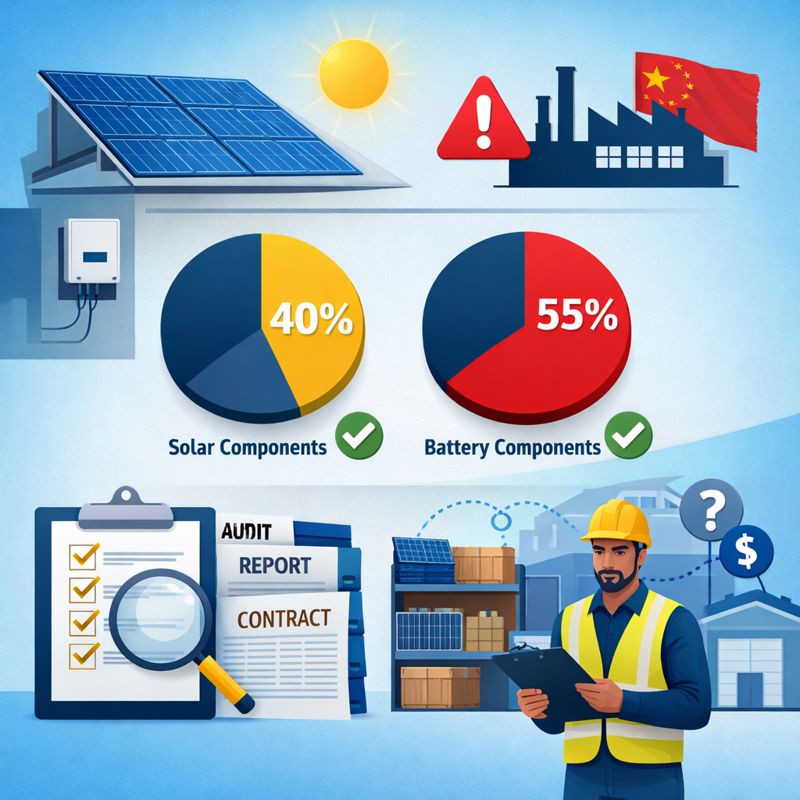
FEOC rules focus on who makes key components and who controls the companies behind them. The goal is to limit reliance on suppliers tied to China, Russia, Iran, or North Korea. These rules apply to solar arrays and battery systems used behind the meter, including projects for offices, retail sites, and industrial loads.
For projects that start construction in 2026 or later, a clear cost share must come from non-FEOC sources. For solar, at least 40 percent of the manufactured product cost must meet this test. Battery systems face a higher bar at 55 percent. These thresholds rise over time.
Behind-the-meter projects often rely on mixed supply chains. Panels, inverters, and battery cells may come from many places. FEOC rules look past labels and into ownership, control, and funding. This shift changes how teams source and verify parts.
Why BTM Solar and Storage Feel the Pressure?
BTM projects move on tight timelines. They often support site loads or backup needs. Delays hurt operations. FEOC checks add time and cost if teams wait too long.
For California Solar, many clients pair rooftop solar with storage to manage peaks or outages. These setups now need deeper review. FEOC compliance for solar and battery projects becomes part of early design, not a last step.
Another wrinkle involves new terms like Specified Foreign Entity and Foreign Influenced Entity. A factory outside China may still fail the test if ownership or control links back to a covered nation. It sounds messy, and yes, it can be.
Cost Accounting and the Paper Trail
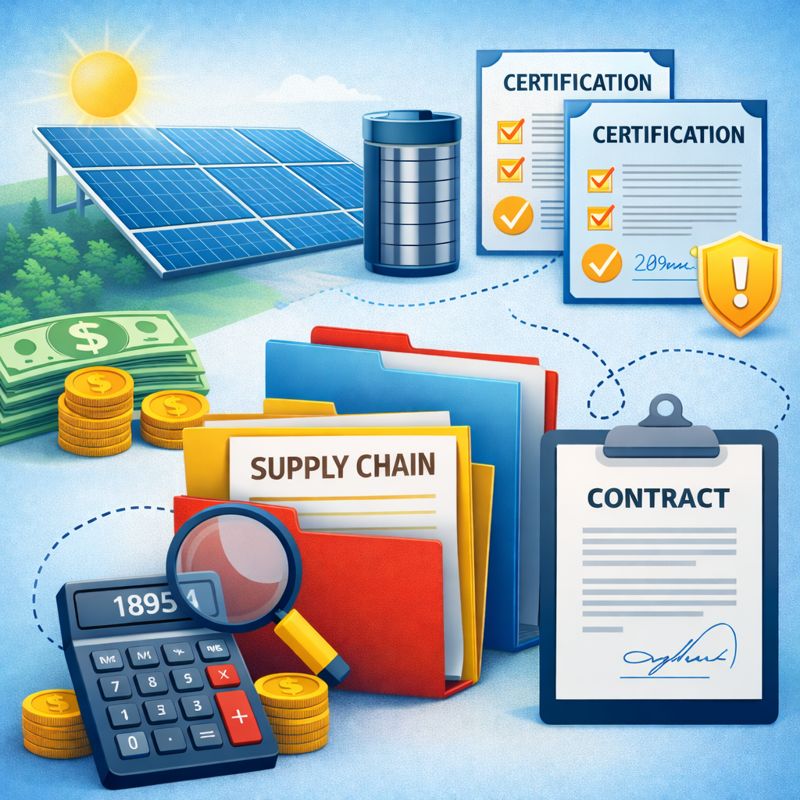
FEOC compliance relies on line item cost tracking. Each major part gets reviewed. Steel racks and wiring do not count, but most other manufactured items do. This approach puts pressure on suppliers to open their books.
For developers and site owners, the task feels like herding cats. Data comes from many vendors. Formats differ. Some distributors struggle to provide clear proof. Direct talks with manufacturers often work better.
At California Solar, teams stress planning. Early checks avoid rework later. Waiting until install day is a gamble.
Core Compliance Tasks to Expect
Here is where the real work shows up. Teams should prepare for these steps during sourcing and contracting:
- Supply chain audits that trace parts and materials
- Detailed ledgers showing cost shares by component
- Written certifications from suppliers on ownership and control
- Contract clauses that require reporting and audit rights
- Due diligence on funding, board roles, and licenses
This list looks heavy. Still, skipping any item raises risk.
Using Foreign-Made Components the Right Way
A common question pops up fast. Can BTM projects still use parts made overseas? The answer is yes, but with care. Location alone does not decide compliance. Ownership and control do.
A panel made in the US by a firm owned by a covered nation may fail. A panel made abroad by a firm without such ties may pass. Each case needs proof. FEOC-compliant solar plus storage projects depend on solid records, not guesses.
Planning Tips for Commercial Sites
BTM solar and storage often serve offices, schools, and plants. These sites value uptime. Planning for FEOC rules keeps schedules steady.
Teams offering commercial solar energy installation service now act as guides as well as builders. They help clients map suppliers, spot risks, and line up backups. Dual sourcing helps hedge bets. Clear contracts set rules upfront.
Battery systems add more checks. Cell origin, module assembly, and control systems all matter. For battery storage in commercial buildings, the FEOC review should start with system design.
Staying Ahead While Rules Evolve
One hard truth remains. Guidance from Treasury stays thin. Cost ratio tables specific to FEOC rules are not out yet. Many teams lean on domestic content methods as a stopgap.
This gap means judgment calls. It also means working with tax and legal pros who know the terrain. California Solar stays plugged in and shares updates with clients as rules shift.
Ready to Move Forward with Confidence?
FEOC rules add work, but smart planning cuts stress. California Solar helps clients sort facts from noise and build projects that stand up to review. If you are planning a behind-the-meter solar or storage system, now is the time to get your ducks in a row. Reach out to California Solar and keep your project moving without nasty surprises.
Frequently Asked Questions
Q1: What are the FEOC requirements for behind-the-meter solar projects?
BTM solar projects starting construction in 2026 must ensure that at least 40 percent of the manufactured product costs come from non-FEOC sources. The review focuses on who owns and controls the manufacturers, not only where parts are made.
Q2: How do FEOC rules affect battery storage eligibility for ITC?
Battery systems face a higher threshold. At least 55 percent of manufactured product costs must meet non-FEOC standards. This percentage rises over time. Each battery component needs review.
Q3: What documentation is required for BTM FEOC compliance?
Projects need supply chain audits, cost ledgers, supplier certifications, and contracts with reporting terms. Due diligence on ownership and control also plays a role in FEOC compliance for solar and battery projects.
Q4: Can behind-the-meter projects use foreign-manufactured components?
Yes. Foreign manufacturing alone does not block use. Compliance depends on ownership, control, and funding links. Clear proof is key to passing the review.
Q5: How can developers plan for FEOC compliance in BTM projects?
Start early. Verify suppliers, consider direct purchases, and line up alternate sources. Review contracts and licenses for control risks. This approach supports the smooth delivery of FEOC requirements for behind-the-meter solar systems.