
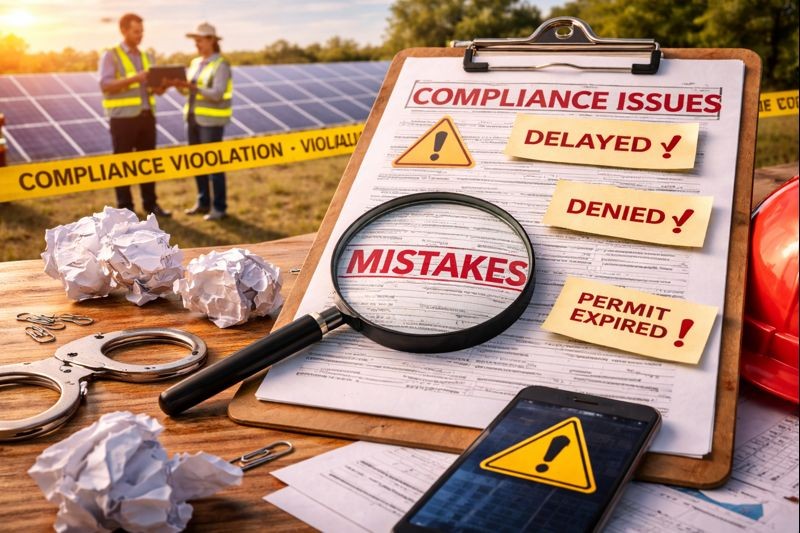
Common FEOC Compliance Mistakes That Can Delay or Kill Solar Deals

Solar teams across California feel the clock tick. Rules shift. Paper stacks grow. One slip can stall a deal. For commercial and industrial builders, FEOC rules now shape every choice, from parts to partners. Common FEOC Compliance Mistakes often appear early and can be easily overlooked. California Solar sees these risks daily on large systems for business sites. This guide breaks down the traps in simple terms, so projects stay on track and close on time.

Mistake One: Trusting Labels Instead of Owners

Country labels mislead. FEOC looks at who makes and controls parts, not only where a factory sits. A panel built in the US can still fail if a restricted owner runs the shop. Teams often skip deep checks. Later, a tax review finds a link to a banned entity. The deal pauses or dies.

What to do instead: Trace ownership. Check boards. Review debt ties. Ask for clear proof.

Mistake Two: Weak Supply Chain Proof

Paper matters. Verbal promises fail audits. FEOC supply chain auditing needs real records at the line item level. Missing costs or mixed bills cause gaps. Gaps raise red flags.

Keep files clean from day one. Track costs for cells, modules, inverters, and battery parts. Exclude steel racking and wiring from the math. Stay strict.

Mistake Three: Late Compliance Planning

Waiting hurts. Teams rush near the construction start. Prices lock. Parts ship. Then someone asks for FEOC proof. Scrambles follow. Delays pile up.

Start early. Build compliance into design and buy plans. California Solar pushes early checks so projects stay on rails.

Mistake Four: Distributor Blind Spots

Distributors help with speed. Yet they may lack deep cost data. Some cannot pass audits. For large commercial and industrial work, direct buys give clearer trails.

Consider direct purchase when possible. Demand full ledgers and attestations either way. This cuts FEOC compliance risks for solar projects.

Mistake Five: Ignoring Control Rights in Contracts

Control hides in fine print. Tech licenses. Board seats. Lender covenants. Any right that guides choices can trigger Foreign Influenced Entity rules. Deals miss this often.

Review contracts with care. Strip rights that give outside control. Keep authority local.

Mistake Six: Poor Cost Ratio Math

Rules set targets. Solar starts at 40 percent non-FEOC content and climbs. Battery systems start higher. Errors in math break eligibility. Teams sometimes blend costs or miss items.

Use a clear method. Follow IRS domestic content guidance until new tables arrive. Document every line.

Mistake Seven: No Backup Suppliers

Single-source plans break fast. If a vendor fails checks, work stops. A dual path saves time.

Have a backup ready. Confirm both paths meet the rules. This forms a solid FEOC compliance checklist for solar projects.

Mistake Eight: Forgetting Ongoing Risk

Compliance is not a one-time task. Ownership can change. Debt can shift. A clean start can turn risky later.

Monitor partners through build and close. Update files. Stay alert.

One Place to Focus First

Use this short list to steady your work:

  • Verify ownership and control for every maker
  • Collect cost ledgers per component
  • Secure written attestations
  • Review contracts for control rights
  • Keep a second supplier ready

These steps reduce FEOC compliance errors in solar projects and keep schedules intact.

Why California Solar Helps?

California Solar works on commercial and industrial buildings across the state. Teams manage solar and battery systems for business sites with care. Experience with audits, vendors, and builds brings calm to a noisy rule set. From early design to close, the focus stays on clean power and strong returns for owners using solar panels for business premises.

Final Thoughts

FEOC rules add weight to every choice. Small slips carry high costs. Clear checks, early plans, and strong records keep deals alive. Stay sharp. Ask hard questions. Build with confidence.

Ready to Move Forward?

California Solar helps teams spot issues early and fix them fast. Planning a commercial and industrial solar battery project in California? Reach out today. Let’s keep your deal moving and your build clean.

FAQs

Q1: How does FEOC compliance affect ITC eligibility for battery projects?
Battery projects must meet higher non-FEOC cost ratios. Missing the mark can block credit access or cause loss later.
Q2: What steps are required to ensure BESS FEOC compliance?
Verify owners and control. Track part costs. Gather attestations. Review contracts. Monitor changes.
Q3: Can a battery storage project lose ITC if FEOC rules are violated?
Yes. Violations can lead to loss or recapture after a claim.
Q4: What documentation do developers need for FEOC-compliant BESS projects?
Cost ledgers, supplier attestations, ownership proof, and contract reviews.
Q5: How can developers mitigate FEOC compliance risks in battery projects?
Plan early. Use dual suppliers. Audit often. Keep records tight.
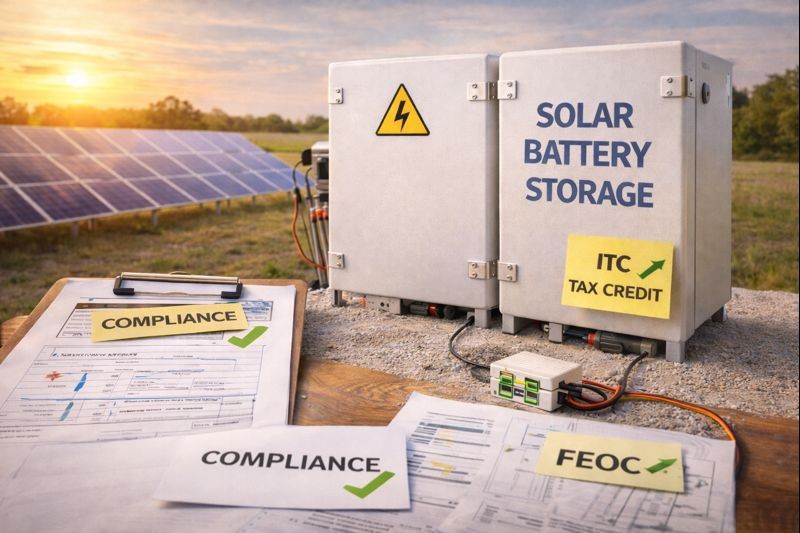
FEOC Compliance and the ITC: How to Keep Your Battery Storage Project Eligible

The solar world feels like a race right now. Teams push hard to lock projects before rules shift again. For battery storage work starting in 2026, the pressure rises fast. New federal rules change how projects qualify for tax credits. One rule stands out, and it affects every commercial and industrial battery plan in California. Battery storage FEOC compliance now shapes how projects get built, sourced, and approved.

California Solar works with commercial and industrial buildings across the state. Our focus stays on smart planning, clean power, and strong project value. FEOC rules now sit at the center of battery storage decisions. Let’s break it down.

What FEOC Rules Mean for Battery Storage in 2026?

FEOC stands for Foreign Entity of Concern. These entities link to China, Russia, Iran, or North Korea. New rules limit how much equipment from these groups can appear in battery systems.

For battery storage projects starting in 2026, at least 55 percent of the system cost must come from non-FEOC sources. Each year after, the bar moves higher until it hits 75 percent. This applies to the cost of manufactured parts. Steel racks and wires do not count.

These are not simple checks. Costs get tracked line by line. Every battery cell, module, and control unit matters. FEOC rules for battery storage projects change how teams pick partners and suppliers.

Ownership and Control Matter More Than Location

Here is the tricky part. FEOC status depends on who owns or controls a company. It does not depend on where a factory sits.

A firm owned by a Chinese parent may build parts in the United States. Those parts still fail FEOC tests. Control also matters. Board seats, loans, and license deals can trigger risk.

New terms now shape reviews:

Specified Foreign Entity looks at ownership.

Foreign Influenced Entity looks at control.

This makes early checks vital. Miss one detail and a project can fall apart later.

Why Battery Projects Face More Risk?

Battery systems use global supply chains. Cells, minerals, and control parts often come from many places. Each link adds risk.

Without strong planning, teams face delays, lost credits, or recapture claims later. FEOC 2026 battery storage rules demand a slower and smarter build path.

Here is where teams feel the weight most:

• Supply chain checks take time

• Cost tracking needs new tools

• Vendor proof must stay on file

Only one weak link can break compliance.

How California Solar Approaches FEOC Planning?

California Solar supports commercial and industrial clients who want steady results. Our team starts FEOC planning early. We help clients line up clean supply paths and keep records tight.

We also help teams think beyond today. Rules tighten each year. Systems built now must hold up later.

When we review battery systems, we focus on fit, value, and long-term use. We help clients compare options and select the best solar batteries for energy storage while keeping FEOC risk low.

This approach helps projects move forward with less stress.

Documentation Is Not Optional Anymore

Paperwork now carries real weight. Projects must prove compliance if asked. No proof means lost credits.

Key records include supplier letters, cost ledgers, and ownership checks. Contracts must also include audit rights and supply tracing terms.

For commercial and industrial builds, FEOC-compliant battery storage systems require a paper trail from start to finish. Teams should store records for years, not months.

Timelines Change Under FEOC Rules

Old timelines no longer work. Battery orders take longer. Reviews take longer. Legal checks take longer.

Projects that plan late face hard choices. Swap parts or pause builds. Both cost money.

With early planning, teams keep control. They avoid panic buys and rushed contracts. FEOC rules for battery storage projects reward patience and clear thinking.

What Happens If You Miss FEOC Rules?

Penalties hurt. Credits can vanish. Past credits can get pulled back. Projects may fail to close.

No builder wants to explain lost value after COD. Compliance protects project health.

California Solar helps clients stay ahead. We track rule updates and adjust plans as needed. Battery storage FEOC compliance stays part of every serious project review.

Ready to Build with Confidence?

Battery storage projects face new rules and real pressure. With the right plan, teams stay on track and protect value. California Solar helps commercial and industrial clients across California navigate FEOC rules 2026 battery storage with care and clarity.

If you are planning a commercial and industrial battery storage project, talk with our team today. Let’s build smart, stay compliant, and keep your project moving forward.

Frequently Asked Questions
Q1: Why is early planning critical for FEOC compliance?
Early planning gives teams time to vet suppliers and check ownership. It lowers risk and keeps schedules steady.
Q2: What are the risks of last-minute FEOC compliance fixes?
Late fixes raise costs and slow builds. Some parts may not have clean replacements.
Q3: How should developers plan supply chains to meet FEOC rules?
Teams should vet vendors early and confirm control details. Dual sourcing helps reduce risk.
Q4: What documentation is required to avoid FEOC penalties?
Projects need supplier letters, cost records, and contract terms with audit rights.
Q5: How can FEOC compliance impact project timelines?
Reviews and sourcing add time. Projects with early plans move faster and stay calm.