

The commercial solar space is moving fast, and 2025 is already showing signs of being a breakthrough year. New panels, smarter systems, and more efficient tech are changing how businesses generate, store, and manage power. If you’ve been waiting for the right time to invest in solar, this could be the year to act.
At California Solar, we help clients tap into the most advanced options on the market. Our team stays ahead of the curve to make sure your business benefits from the top commercial solar panel technologies 2025 has to offer.
A Look at the Best Commercial Solar Panels in 2025
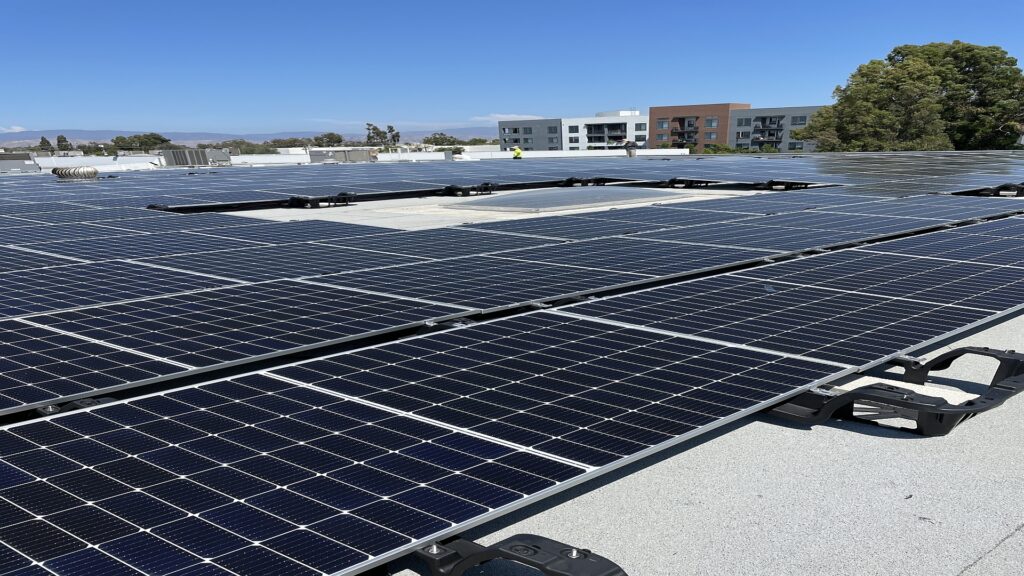
This year’s best commercial solar panels 2025 are all about higher efficiency, durability, and seamless integration. Top manufacturers are pushing limits, with many panels now exceeding 22–24% efficiency. That means more energy from the same rooftop footprint—and a stronger return on your investment.
Popular 2025 picks include:
- N-type TOPCon panels – These offer low degradation rates and improved efficiency over traditional P-type cells.
- IBC (Interdigitated Back Contact) panels – A top choice for premium efficiency and sleek, all-black designs.
- Bifacial panels – These can capture sunlight from both sides, boosting energy production especially on reflective surfaces.
If you’re focused on long-term performance, high-efficiency solar panels for business are worth the upfront investment.
Recent Blog: The Economics of Commercial Solar: Cost vs. Benefit Analysis
Emerging Solar Technologies for Commercial Use
Innovation isn’t slowing down. Several emerging solar technologies for future commercial use are gaining traction:
- Perovskite tandem cells – These combine materials to achieve ultra-high efficiency (over 30% in labs).
- Transparent solar panels – Perfect for integrating solar into windows and glass facades.
- Solar skins – Custom wraps that blend with roofing while still producing power.
These new technologies in commercial solar panels are shaping the future and may soon become standard features.
New Solar Panel Trends for Businesses
There’s a growing focus on adaptability and data-driven systems in 2025. New solar panel trends for businesses include:
- Smart panels that track sunlight and adjust angles
- Integrated monitoring with real-time reporting
- AI-assisted energy forecasting and load balancing
These features are part of smart solar systems for businesses, helping facilities operate more efficiently and reduce downtime.
Reviewing Commercial Solar Panel Options
Not all panels fit every project. Commercial solar panel options now come in a wider range to suit flat roofs, carports, and vertical spaces. Some panels are optimized for high temperatures, while others are built for coastal areas where corrosion can be a problem.
We help you choose the right fit—not just based on power output, but also on site conditions and long-term value. That’s why working with a trusted commercial solar panel installation service provider in Southern California is key.
The Rise of Industrial Solar Advancements
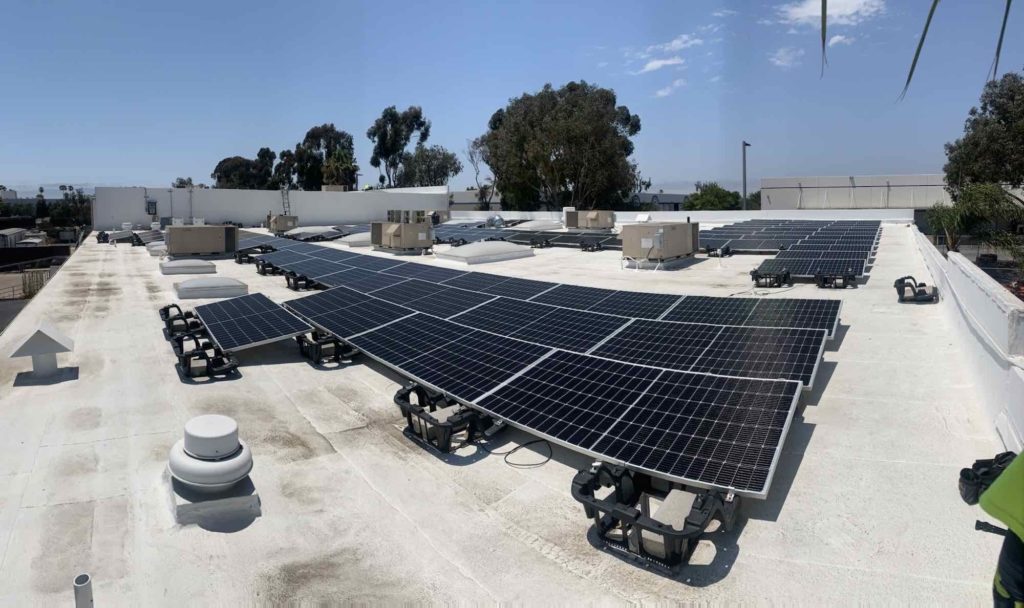
Larger operations are reaping big rewards from recent industrial solar panel advancements. Today’s industrial-grade systems are designed to power factories, warehouses, and data centers with minimal interruption. Features include:
- Greater inverter capacity
- Modular battery storage
- Advanced grid-tied and off-grid flexibility
These upgrades are transforming how businesses view energy reliability and performance.
Why Upgrade? Commercial Solar System Upgrades in 2025
Upgrades/maintenance are eligible for solar incentives that are currently at an all time high and in danger of being eliminated politically. If your system is over 7–10 years old, it might be time for a refresh. Commercial solar system upgrades in 2025 can improve your energy output, lower maintenance needs, and prepare you for battery storage add-ons. Plus, upgraded inverters can better manage energy flow during peak hours or outages.
Choosing Top-Rated Business Solar Panels
The top brands this year are all focused on longevity, performance, and sustainability. Top-rated business solar panels are built to withstand harsh conditions, from California’s desert heat to coastal humidity.
We only install Tier 1 panels and equipment that’s tested for real-world durability. Our priority is making sure you get the most from every ray of sunshine.
Also Read: Integrating Solar Power with Sustainable Business Practices
Go Smart with Commercial Solar Installation in Southern California
Businesses across the state are upgrading to smarter setups. If you’re in the market for a commercial solar installation with the latest panels in Southern California, we’ve got you covered.
At California Solar, our team handles every part of the project—from engineering to permitting to final inspection. We don’t outsource or cut corners. Just solid systems built for serious performance.
Why Choose California Solar?
We specialize in full-service commercial installations, including solar, battery storage and EV chargers. Our team understands the power needs of modern commercial buildings, from small non-profits to multi-site corporations. We’re a go-to partner for commercial solar panel installation service providers in Southern California, and we back every install with transparent pricing and proven results.
Need financing? No problem. We offer flexible terms that work for any financial structure. It’s just one more way we help you go solar with confidence.
Ready to upgrade or install a cutting-edge commercial system?
Let California Solar help you find the smartest solution for 2025 and beyond. Get a Free consultation today to upgrade or install a commercial solar system.
FAQs
Q1: What is the new solar panel technology for 2025?
Perovskite tandem cells and smart bifacial panels are leading the way with higher efficiency and better adaptability for commercial use.
Q2: What is the solar industry outlook for 2025?
The industry is booming, especially for commercial projects, thanks to improved tech, strong federal incentives, rising utility costs and the threat of eliminating incentives
Q3: What is the most efficient commercial solar panel?
Currently, N-type TOPCon and IBC panels top the charts with efficiency levels above 22–24%.
Q4: What is the 20% rule for solar panels?
It refers to panel efficiency—meaning 20% of sunlight hitting the panel is converted into usable energy, though newer models are now exceeding this benchmark.


