
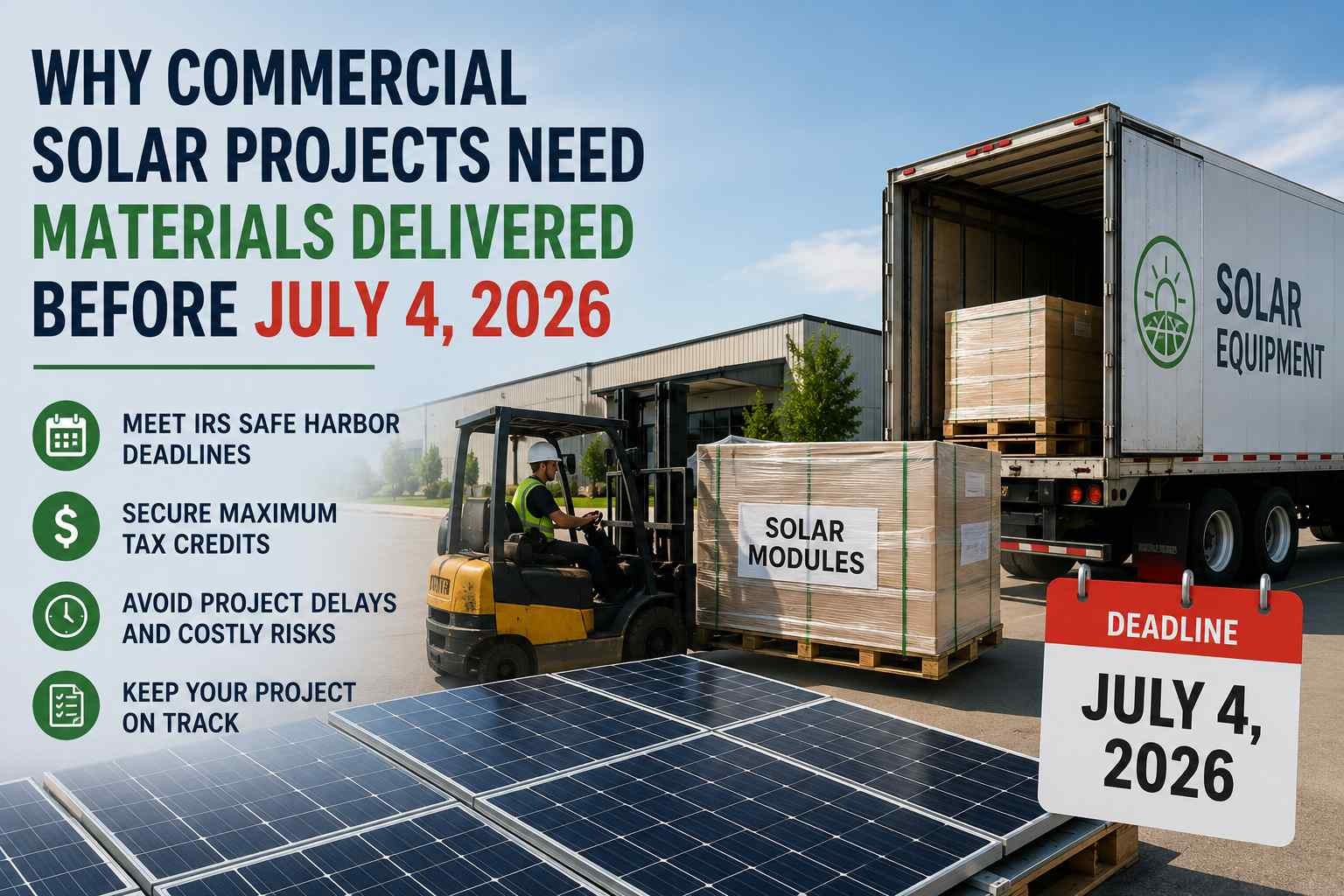
Why Commercial Solar Projects Need Materials Delivered Before July 4, 2026

Energy costs hit hard across California. Business owners want stable power and solid returns. July 4, 2026, now stands as a major tax credit deadline. Smart planning matters more than ever. Delayed shipments can wreck schedules and reduce savings. Early material delivery gives contractors room for permits, inspections, and site work.

Commercial Solar Projects now face tighter rules for tax credits and supply chains. California companies are moving fast to lock pricing, secure equipment, and protect long-term energy goals. California Solar helps businesses prepare before timelines close.

Why Do Solar Materials Need To Arrive Before July 2026

Federal solar incentives still give businesses a strong return. Companies may secure a 30% federal tax credit. Some projects may also qualify for a domestic content 10% adder. Together, these incentives can reduce project costs in a big way.

Still, project timing now matters more than ever. Businesses must meet placement or Commence Construction rules before July 4, 2026. Missing deadlines may reduce incentive value or remove eligibility completely.

Equipment delays create risk. Late panels, inverters, or racking can slow physical work. Once schedules slip, tax credit protection may disappear. California Solar guides businesses through these rules with clear planning and documented milestones.

Can Delayed Solar Materials Impact Project Incentives

Commercial projects need several moving parts. Permits, trenching, electrical work, and utility approvals all depend on timing. Materials arriving late create a chain reaction across every stage.

Here are key problems caused by delivery delays:

  • Missed construction milestones before July 4, 2026
  • Higher labor costs from rushed schedules
  • Utility approval delays
  • Storage issues for partial shipments
  • Lost access to federal incentives and domestic content adders

A project may look ready on paper. Still, federal rules focus on real activity and qualifying expenses. Physical construction must show measurable progress. Contractors cannot rely on promises or unsigned purchase orders. Equipment must connect directly to the scheduled construction work.

FEOC Rules Add Another Layer of Pressure

Supply chain rules changed in 2026. FEOC regulations now limit equipment tied to foreign entities of concern. Projects using restricted components may lose tax credit eligibility.

This issue affects several components:

  • Solar panels
  • Battery systems
  • Inverters
  • Electronic control parts
  • Tracking systems

Businesses now need compliant products with proper documentation. California Solar checks sourcing records before procurement begins. This process protects project eligibility and reduces future audit risk.

Early delivery also helps contractors confirm compliance before installation starts. Waiting until late 2026 creates serious procurement pressure.

Equipment Lead Times Still Shift

Shipping delays still affect commercial construction. Ports, freight routes, customs checks, and factory schedules can change fast. Some equipment also faces a limited domestic supply because more companies now chase compliant products.

This issue directly affects Business Solar Installation Deadlines. Delayed transformers or switchgear can stop an entire project. One missing part may hold up inspections and utility interconnection.

California Solar works with trusted suppliers across compliant supply chains. Early procurement reduces risk and helps businesses maintain stable project timelines.

When Should Businesses Order Commercial Solar Equipment

Commercial solar work moves through several phases. Every phase needs proper coordination. Engineering studies take time. Utility reviews move slowly. Site grading and trenching require permits. Electrical inspections also follow strict schedules.

Smart companies start procurement months before construction begins. Early action protects project sequencing and keeps crews productive. Businesses planning large systems should avoid last-minute decisions. Delays near the deadline may create bottlenecks across California.

Financial Impact Can Be Massive

A large commercial solar installation can cost hundreds of thousands of dollars. Some projects exceed one million dollars. Federal incentives reduce upfront costs and improve long-term savings.

Still, missing deadlines changes financial outcomes quickly.

A delayed project may lose:

  • The full 30% federal tax credit
  • The domestic content 10% adder
  • Faster payback periods
  • Better financing terms
  • Long-term return projections

This issue directly affects the Cost of commercial solar panel installation. Businesses facing higher project costs may delay expansion plans or energy upgrades.

California Solar helps companies lock schedules early. This planning protects budgets and keeps projects moving forward.

Financing Timelines Also Matter

Lenders now review project schedules closely. Banks and funding partners want clear procurement plans before approval. Delayed equipment may affect loan terms and project confidence.

Businesses using a commercial solar financing service should begin early discussions with contractors and lenders. Financing approvals must align with construction milestones and equipment delivery dates.

California Solar works with businesses seeking flexible funding plans and stable construction schedules. Early planning gives lenders stronger confidence in project completion.

Smart Planning Protects Energy Goals

Commercial solar gives businesses more control over energy spending. Stable power costs improve budgeting and long-term operations. Solar also strengthens sustainability goals and public image.

Still, strong planning matters more in 2026.

California Solar recommends these steps for businesses pursuing business solar energy solutions:

  • Complete energy assessments early
  • Secure engineering plans quickly
  • Order compliant materials ahead of demand spikes
  • Document construction activity carefully
  • Track delivery schedules from suppliers

These actions reduce pressure near the deadline and improve project stability.

Why California Solar Encourages Immediate Action

California businesses face growing energy pressure. Utility rates continue climbing. Grid reliability concerns also affect operations across several industries. Commercial solar gives businesses stronger control over future energy costs. Still, incentive windows will not stay open forever.

California Solar helps clients move from planning to execution with clear communication and proven scheduling methods. The company also helps businesses navigate FEOC compliance, tax credit rules, and construction milestones.

Projects started early gain more flexibility. Contractors can secure materials, plan labor, and avoid rushed decisions. Businesses also gain stronger financial visibility before installation begins. Waiting creates risk. Early action creates opportunity.

Secure Your Commercial Solar Timeline Before Deadlines Close

July 4, 2026, will arrive fast. Businesses waiting too long may lose valuable incentives and project flexibility. California Solar helps companies secure compliant materials, protect tax credit eligibility, and build reliable long-term energy strategies. Start planning now and move forward with confidence.

Frequently Asked Questions

Q1: What causes delays in commercial solar equipment deliveries?

Factory slowdowns, shipping backups, customs reviews, and supply shortages create delivery delays. FEOC compliance checks also slow procurement. Large demand across California increases pressure on available inventory. Early ordering helps businesses avoid missed construction schedules and tax credit complications.

Q2: How far in advance should businesses plan commercial solar projects?

Businesses should begin planning at least twelve months before installation goals. Engineering reviews, financing approvals, utility coordination, and material sourcing all require time. Early planning also protects access to federal incentives and compliant equipment before demand spikes grow stronger.

Q3: Can material shortages increase commercial solar installation costs?

Yes. Limited supply can raise equipment prices and labor costs. Contractors may also pay rush shipping fees during deadline pressure. Delayed timelines may increase financing expenses and reduce tax credit value, which changes total project economics for businesses.

Q4: What happens if a commercial solar project misses a tax credit deadline?

Projects missing federal deadlines may lose access to the full 30% tax credit and domestic content adder. Reduced incentives increase upfront costs and extend payback periods. Missed deadlines may also affect financing structures and project return expectations.

Q5: Are solar permitting and inspections affected by project timelines?

Yes. Permitting offices and inspectors handle large workloads near major deadlines. Delayed applications may slow approvals and utility interconnection schedules. Businesses starting early gain better scheduling flexibility and reduce risks tied to crowded inspection calendars.

How Deposits and Equipment Orders Help Secure Solar Tax Credits in 2026

Time moves fast in commercial solar. July 4, 2026, may seem far away today. Still, project delays can happen quickly. Permits, design work, and equipment shipping all take time. Businesses across California now face a short window to secure full federal incentives. Solar Tax Credits in 2026 can help companies save a significant amount on solar projects.

California Solar helps business owners move early before supply delays and rule changes create trouble. Early deposits and smart equipment orders can protect tax credit rules, lock prices, and keep projects moving from day one.

Why 2026 Is Important for Commercial Solar

The federal Solar Investment Tax Credit gives businesses a 30% tax credit for qualified projects. Some companies may also qualify for the domestic content 10% adder. Together, these savings can lower project costs in a big way.

Still, strict deadlines now shape project planning. Businesses must meet placement rules or Commence Construction rules before July 4, 2026. Projects also need to follow FEOC rules linked to equipment sourcing and supply chains. California Solar helps businesses understand these rules with clear planning and proper records.

Project delays can create serious problems. Equipment shortages, permit delays, and shipping issues may push projects past the deadline. Early action gives businesses a better chance to secure full tax savings.

How Do Deposits Help Protect Solar Tax Credits

A deposit does more than reserve a project slot. It also helps businesses move toward Safe Harbor rules linked to the federal tax credit. Under the Five Percent Safe Harbor method, a business must pay or spend at least five percent of total project costs before the deadline. Deposits related to signed contracts can help meet this rule. Small placeholder payments do not count. Funds must connect to real project costs and active equipment orders.

California Solar helps businesses plan deposits the right way. Proper records and signed agreements matter during tax reviews.

Here are a few ways deposits help projects move forward:

  • Reserve solar panels and inverter inventory
  • Lock prices before equipment costs rise
  • Show proof of project commitment
  • Reduce delays linked to supplier backlogs
  • Keep installation schedules on track

Businesses considering deposits to help secure solar tax credits should understand one simple point. Waiting too long can create equipment shortages and tax credit risks.

Why Should Businesses Order Solar Equipment Early

Solar equipment passes through a long process before reaching a project site. Factories, ports, freight companies, and suppliers all affect delivery times. A delay at one stage can slow the full project.

Businesses should think beyond shipping dates. FEOC rules now place more focus on equipment sourcing. Some foreign-linked parts may reduce or block tax credit eligibility. California Solar helps businesses choose approved products with proper records and verified sourcing.

Early equipment orders also give companies more control over project timing. Equipment secured now may avoid shortages later in 2026.

Supply Chain Problems Still Affect Solar Projects

The solar market still faces pressure from labor shortages, shipping delays, and new compliance checks. Commercial projects need large amounts of equipment. One missing part can hold up the full installation.

Some businesses think equipment will arrive quickly after permits finish. Real project schedules show a different story. Inverters, transformers, and mounting parts may take months to arrive.

Financing groups also review supplier records more closely now. Businesses investing in commercial renewable energy solutions should move early instead of waiting for supply conditions to improve.

Understanding Commence Construction Rules

The Commence Construction rule plays a big role in solar tax credit eligibility. Businesses must show real project progress before July 4, 2026.

Projects may qualify through physical construction work. Physical work may include trenching, foundation work, or mounting structure installation. Equipment orders alone do not satisfy physical construction rules.

California Solar helps businesses keep clear records related to construction work and equipment purchases. Good records help lower risk during future tax reviews.

How Long Does Commercial Solar Procurement Take?

Businesses may expect a fast process. However, commercial projects usually take longer than expected.

Several steps shape project timelines:

  • System design and engineering
  • Utility approvals and reviews
  • Equipment sourcing and checks
  • Manufacturing and shipping
  • Installation planning and inspections

Large systems for offices, warehouses, and factories need careful planning. Some projects may take several months before equipment reaches the property.

California Solar works closely with suppliers and project teams to keep schedules moving. Early planning helps businesses avoid rushed choices near the tax credit deadline.

Commercial Solar Financing and Long-Term Savings

Strong planning also helps with financing. Banks and lenders want clear schedules, secured equipment, and organized project records. Delayed equipment orders may slow financing approval.

Businesses exploring commercial solar financing and tax savings should think long term. Early equipment orders protect more than tax credits. They also help shield projects from price changes and supply shortages.

The 30% federal tax credit, combined with the domestic content 10% adder, can create major savings for qualified projects. Bonus depreciation may also improve project value for some businesses.

Companies installing Solar panels for business premises gain more control over long-term energy costs while lowering operating expenses.

Why California Businesses Are Moving Early

Commercial property owners across California continue moving toward solar before the 2026 deadline arrives. Delays linked to supply chains and compliance reviews create real risks for projects started too late.

Businesses planning a commercial solar installation now gain better control over scheduling, equipment orders, and financing. California Solar helps companies build smart timelines while protecting tax credit eligibility from start to finish.

Projects started early also create more flexibility if permit or shipping delays appear later.

California Solar Helps Businesses Prepare for 2026

California Solar works with commercial clients across Southern California to simplify project planning before the deadline arrives. Every stage matters in 2026, from equipment orders to compliance reviews.

Businesses exploring commercial renewable energy solutions need a clear plan, trusted equipment suppliers, and organized records. California Solar helps clients protect incentives while building long-term energy stability.

Reach Out Today

California Solar helps businesses prepare before the 2026 deadline creates more pressure. Reach out today to secure your project schedule, protect tax credit eligibility, and move toward reliable long-term energy control.

Frequently Asked Questions

Q1: How do supply chain issues affect commercial solar projects?

Supply chain delays can slow equipment delivery, permit schedules, and installation work. Missing parts may delay inspections and tax credit timelines. Early equipment orders help businesses reduce risks and keep projects moving before the 2026 deadline.

Q2: Can equipment shortages delay solar tax credit eligibility?

Yes. Equipment shortages can push projects past required deadlines. Delays linked to inverters, transformers, or solar panels may affect tax credit qualification. Early purchasing helps businesses secure inventory before demand increases across the commercial solar market.

Q3: What documents are needed to secure commercial solar incentives?

Businesses need signed contracts, payment records, equipment invoices, engineering plans, and construction logs. These records help prove project progress and Safe Harbor qualification. Organized paperwork also protects projects during future tax reviews or audits.

Q4: Why are commercial solar installations taking longer to complete?

Commercial projects involve permits, utility reviews, engineering work, equipment orders, and compliance checks. Supply chain pressure also affects delivery schedules. Large systems need careful planning, which can extend project timelines before final approval and operation.

Q5: How early should businesses begin planning a commercial solar project?

Businesses should begin planning as early as possible before July 4, 2026. Early action creates more time for financing, equipment sourcing, engineering, and permits. It also improves the chance of securing full federal tax credit eligibility.