
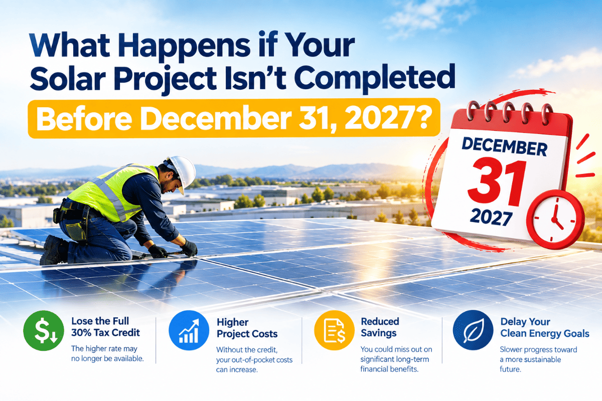
What Happens if Your Solar Project Isn’t Completed Before December 31, 2027?

A commercial solar project takes time. Businesses must plan the system, get permits, order equipment, complete construction, and bring the system into use. Each stage can affect the final tax benefit.

The commercial solar project deadline of December 31, 2027, gives eligible businesses a key date to remember. Under the rules covered in this article, a qualifying project that meets the required start-of-construction rules and is placed in service before the deadline can receive the full 30% federal Investment Tax Credit.

Missing a key date can change the tax benefit available to a business. Good planning can help keep the project on track.

Why Is December 31, 2027 Important for Commercial Solar?

The December 31, 2027 solar tax credit deadline matters for businesses planning a new solar system. A qualifying project that meets the required rules can receive the full 30% federal credit when it is placed in service before the deadline.

The project schedule should account for every major stage. A delay in one area can push back later work.

Businesses should choose a solar panel installation company with commercial experience. The right team, like California Solar, can help build a clear work plan and keep key tasks moving.

A commercial project can include:

  • Site review
  • System design
  • Engineering
  • Permits
  • Utility approval
  • Equipment orders
  • Construction
  • Electrical work
  • System testing
  • Final inspection
  • Commissioning
  • Placed-in-service steps

A good schedule should leave room for permit reviews, utility work, equipment delivery, weather, and site issues. Building in some extra time can help a business avoid a last-minute rush.

What Happens if a Project Misses the Deadline?

Missing December 31, 2027, does not mean every project loses all tax benefits in every case. The result depends on the project’s facts and the tax rules that apply to it.

The business should review the commercial solar installation deadline well before the final year of construction. Tax rules can look at both when construction starts and when the system is ready for use.

Good records matter. They can help show when key project work took place.

Businesses should keep records such as:

  • Signed contracts
  • Purchase orders
  • Invoices
  • Payment records
  • Construction records
  • Permits
  • Utility documents
  • Equipment delivery records
  • Inspection reports
  • Testing records
  • Commissioning documents
  • Placed-in-service records

These records give the tax team a clear view of the project timeline.

The commercial solar investment tax credit can have a major effect on the cost of a solar project. A business should have its tax adviser review the credit before making final decisions.

Read More :-How to Secure the 30% Commercial Solar Tax Credit

How Does the Start of Construction Affect the Project?

The start of construction can matter when a project is being reviewed for federal tax benefits. The solar project beginning-of-construction deadline supplied for this planning period is July 4, 2026.

Businesses with projects affected by this date should review the exact federal rules with a tax adviser. The start of construction does not simply mean workers arrive at the property. Federal tax rules use specific tests to decide when a project has begun. Certain spending and construction work can matter.

For this reason, tax planning should start before construction. The solar contractor, project owner, and tax team should keep the same project dates and records. A full solar tax credit eligibility review should look at the project type, business entity, construction dates, labor rules, FEOC rules, equipment, and other tax requirements.

Can Commercial Solar Projects Get Extra Tax Credits?

Some eligible projects can receive extra credits called ITC adders. Three types of adders can provide up to 10% each when a project meets the required rules.

Energy Community Adder

A project can qualify for an extra credit when it meets the federal rules for an eligible energy community.

Low-Income Adder

Certain projects that meet the federal low-income rules can qualify for an extra credit.

Domestic Content Adder

A project can qualify for an extra credit when it meets the rules for using qualifying domestic content.

Each adder has its own requirements. Businesses should confirm eligibility before counting an adder in their project budget.

Commercial solar energy storage can also be part of a larger solar plan. The tax treatment depends on the project design and the rules that apply to the system.

What Should Businesses Know About Direct Pay?

Some organizations can use direct pay for eligible clean energy projects. The groups listed in the tax information provided for this article include tax-exempt entities, state governments and political subdivisions, the Tennessee Valley Authority, Indian tribal governments, Alaska Native Corporations, and qualifying rural electric cooperatives.

Direct pay has its own rules. Prevailing wage and apprenticeship requirements can affect the credit rate. Under the supplied tax guidance, meeting the required wage and apprenticeship rules supports the 30% increased rate. The base rate is 6%.

FEOC rules need review as well. Businesses should check the project structure, equipment sources, ownership details, and supply chain with qualified tax professionals.

How Can a Business Keep Its Solar Project on Track?

Good planning should start before construction begins. A business can bring its solar contractor, engineer, utility, tax adviser, and other key teams into the plan early.

A useful project checklist includes:

  1. Confirm the tax credit rules before approving the project.
  2. Review the start-of-construction rules.
  3. Set a clear project schedule.
  4. Plan for permit and utility review times.
  5. Order equipment early.
  6. Track each major project date.
  7. Review FEOC requirements.
  8. Check wage and apprenticeship rules when they apply.
  9. Review all three possible ITC adders.
  10. Keep complete project records.
  11. Confirm when the system is ready to be placed in service.
  12. Have the tax team review the final project records.

As a reliable business solar panel installation company, California Solar helps manage the construction side of the project. Tax advisers should handle the tax review and confirm how the federal rules apply to the business.

What Should Businesses Do Before the 2027 Deadline?

Businesses should not wait until the final months of 2027 to review their project schedule. A project can involve several parties, and each one needs enough time to finish its part. Start by reviewing the project status. Then check permits, equipment orders, utility work, construction progress, testing, and final approval.

The commercial solar construction timeline should show each key step and its target date. It should include enough time for work outside the contractor’s direct control. A clear schedule helps the business spot problems early and act before a delay affects the final project date.

Start Planning Before the Clock Runs Down

A commercial solar project involves more than installing panels on a building. The project needs careful planning from the first design meeting through final system testing. The solar tax credit after 2027 depends on the federal rules in effect for the project and its specific facts. Businesses should review their options before making a major investment.

California Solar helps commercial customers plan and build solar projects with a clear focus on the work, schedule, and needs of the business. If your company is planning solar, start the conversation early and give your project enough time to reach each key milestone.

Frequently Asked Question

Q1: What happens if my commercial solar project is not completed before December 31, 2027?

The result depends on the project’s start date, completion status, placed-in-service date, and tax rules. Missing the deadline can affect the credit available. A tax adviser should review the project before the deadline passes.

Q2: Can a solar project still qualify for the Section 48E tax credit after the 2027 deadline?

A project can still have tax credit options after 2027, depending on the law and the project’s facts. Businesses should review the rules for the project year, construction date, and system status with a tax professional.

Q3: What does “placed in service” mean for commercial solar tax credit eligibility?

Placed in service generally means the completed solar system is ready and available for its intended use. Testing, final approval, and other project records can help show when the system reached this stage.

Q4: How does the July 4, 2026 beginning-of-construction deadline affect solar projects?

The July 4, 2026 date can affect projects that rely on the related start-of-construction rules. Businesses should review the required test and keep records of spending, contracts, and construction work with their tax adviser.

Q5: How can businesses avoid delays that could affect their commercial solar tax benefits?

Build a detailed schedule early and track permits, equipment, utility work, construction, inspections, and system testing. Regular project checks can help find issues early. Tax advisers should review key dates tied to credit eligibility.
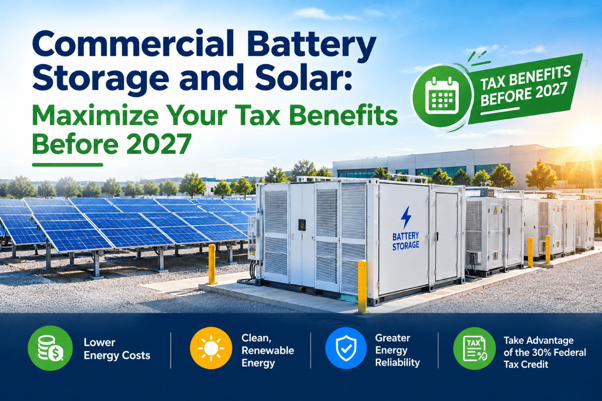
Commercial Battery Storage and Solar: Maximize Your Tax Benefits Before 2027

Businesses across California are looking for better ways to control power costs and use clean energy. A commercial solar battery storage solution can help a company produce solar power, store extra energy, and use it later. Federal tax rules also give eligible businesses a limited time to claim a 30% solar and storage tax credit. The key deadline is December 31, 2027.

Businesses need to plan early. A project must meet the right federal rules for timing, labor, equipment, and foreign entity limits. California Solar helps commercial customers review their solar and battery needs and plan projects with these goals in mind.

What Federal Tax Credit Can Commercial Solar and Storage Projects Get?

Eligible commercial solar and battery projects can qualify for a federal Investment Tax Credit. Under the current rules, eligible projects placed in service by December 31, 2027, can qualify for the full 30% credit when all requirements are met.

Businesses need to pay close attention to several rules.

Project Timing

The project needs to meet the required construction or placed-in-service rules. Businesses should track key dates from the start of the project.

Start of Construction

A project must meet federal rules for when construction starts. These rules can help establish whether a project falls within the required time period.

FEOC Rules

Federal rules also include requirements linked to foreign entities of concern, known as FEOC rules. Businesses should review their equipment and supply chain before making final choices.

Labor Rules

Projects seeking the full 30% increased rate need to meet prevailing wage and apprenticeship rules. These requirements should be part of the project plan from the beginning.

For businesses reviewing solar battery tax incentives, project setup matters. A tax expert can review the business structure, project costs, and federal rules before the company claims a credit.

Read More :- Missed the July 4 Commercial Solar Deadline? You Still Have Until 2027

How Can Commercial Battery Storage Reduce Business Energy Costs?

The answer starts with how a battery stores and uses power. Solar panels produce electricity during the day. A battery can store extra solar power for later use.

Store Extra Solar Power

A commercial battery can save unused solar energy during periods of high solar production. The business can use this stored energy later instead of buying as much electricity from the grid.

Manage High-Demand Periods

Some commercial electric bills include demand charges. These charges can depend on the highest level of power a building uses during certain periods.

A battery can provide stored power during selected high-demand periods. The right setup depends on the building, utility plan, and energy use.

Use More Solar Power

Solar production does not always match a business’s power needs. A battery helps shift solar power to a later time. This can help a business get more value from its solar system.

Support Key Business Loads

A battery system can support selected equipment during a power outage when the system is designed for backup use. Businesses can identify key loads before choosing battery size and design.

These benefits make battery storage a useful part of a commercial energy plan.

How Does Section 48E Apply to Commercial Battery Storage?

Section 48E provides a Clean Electricity Investment Credit for qualifying clean energy projects and energy storage technology placed in service after December 31, 2024, subject to the rules that apply to the project.

An eligible project can reach the 30% increased credit rate when it meets the required prevailing wage and apprenticeship rules. Other requirements may also apply, including FEOC rules.

Businesses should review three possible tax credit adders:

Energy Community Adder

A qualifying project in an eligible energy community can receive an additional tax credit. Site location plays an important role in this benefit.

Low-Income Adder

Certain qualifying projects connected to low-income communities or households can receive an additional credit under the applicable rules. Allocation requirements apply.

Domestic Content Adder

A project can qualify for an additional credit when it meets the required domestic content rules. Equipment sourcing becomes an important part of project planning.

Each adder has its own rules. Businesses should review these rules before choosing a site, equipment, or project structure.

Does Commercial Battery Storage Qualify for a 30 Percent Tax Credit?

Eligible commercial battery storage can qualify for the 30% increased rate when the required rules are met. To qualify for the increased rate, businesses must meet the prevailing wage and apprenticeship requirements.

Projects that do not meet these requirements can face the 6% base rate instead of the 30% increased rate.

Direct pay is another option for certain eligible entities. These can include tax-exempt organizations, state governments and political subdivisions, the Tennessee Valley Authority, Indian tribal governments, Alaska Native Corporations, and certain rural electric cooperatives.

Direct pay can provide a 30% payment for eligible entities when the project meets the rules for the increased rate. Businesses should speak with a qualified tax professional to confirm whether their entity can use direct pay.

What Should Businesses Do Before December 31, 2027?

A commercial solar and battery project takes planning. Businesses need time to review energy use, choose equipment, plan construction, and meet federal rules.

A good starting list includes:

  1. Review energy use: Look at power bills, peak demand, and operating hours.
  2. Set clear goals: Decide whether the project should focus on energy savings, backup power, solar use, or a mix of these goals.
  3. Review solar and storage together: Compare solar production with the company’s power needs.
  4. Check tax rules: Ask a tax professional to review Section 48E eligibility.
  5. Review labor rules: Plan for prevailing wage and apprenticeship requirements if the business wants the 30% increased rate.
  6. Check FEOC rules: Review equipment and supply sources before making final purchases.
  7. Track important dates: Keep records of construction start dates and the date the system goes into service.
  8. Keep project records: Save contracts, invoices, equipment details, labor records, and other tax records.

Good commercial solar tax credit documentation can make it easier for a tax professional to review the project and support the credit claim.

How Can California Solar Help With Commercial Projects?

California Solar works with businesses that want to use solar and battery storage for commercial properties. Each project can have different power needs, building use, space limits, and financial goals.

For companies comparing business battery storage solutions, the first step is to understand how the facility uses electricity. A good plan should match battery size and solar output with real business needs.

Businesses can also review different ways to pay for a project. Some companies may consider direct ownership, while others can look at financing or lease options. A commercial solar lease provider can support this review for businesses considering a lease.

Tax rules can vary by business and project structure. Professional tax advice can help confirm which federal benefits apply.

Take the Next Step With California Solar

December 31, 2027, gives commercial businesses a clear date to work toward. Starting early can give your company time to plan solar, add battery storage, review tax rules, and prepare the needed records.

California Solar can help your business explore a commercial solar and storage plan built around your facility and energy needs. Start planning now, review your options, and build a project ready for the 2027 tax credit deadline.

Frequently Asked Question

Q1: Can businesses claim a tax credit for commercial battery storage and solar systems?

Yes. Eligible commercial solar and battery projects can qualify for federal tax credits. The project must meet rules for timing, construction, labor, equipment, FEOC requirements, and other conditions. A tax professional can confirm project eligibility.

Q2: How does Section 48E apply to commercial battery energy storage systems?

Section 48E covers qualifying energy storage technology placed in service after December 31, 2024, under the federal rules. Eligible commercial projects can receive the applicable credit rate when they meet the required conditions.

Q3: Can commercial battery storage qualify for the increased 30% tax credit?

Yes. An eligible commercial battery project can qualify for the 30% increased rate when it meets the required rules. Prevailing wage and apprenticeship requirements apply when a project seeks the increased rate instead of the 6% base rate.

Q4: Why should businesses plan solar projects before the 2027 deadline?

Businesses need time to plan the system, choose equipment, meet labor rules, check FEOC requirements, and complete construction. Eligible systems placed in service by December 31, 2027, can qualify for the full 30% credit under current rules.

Q5: What documentation and requirements are needed to claim commercial solar and battery storage tax benefits?

Businesses should keep contracts, invoices, equipment records, construction dates, labor records, ownership details, and other project records. Strong commercial solar tax credit documentation helps a tax professional review the project and support the tax credit claim.