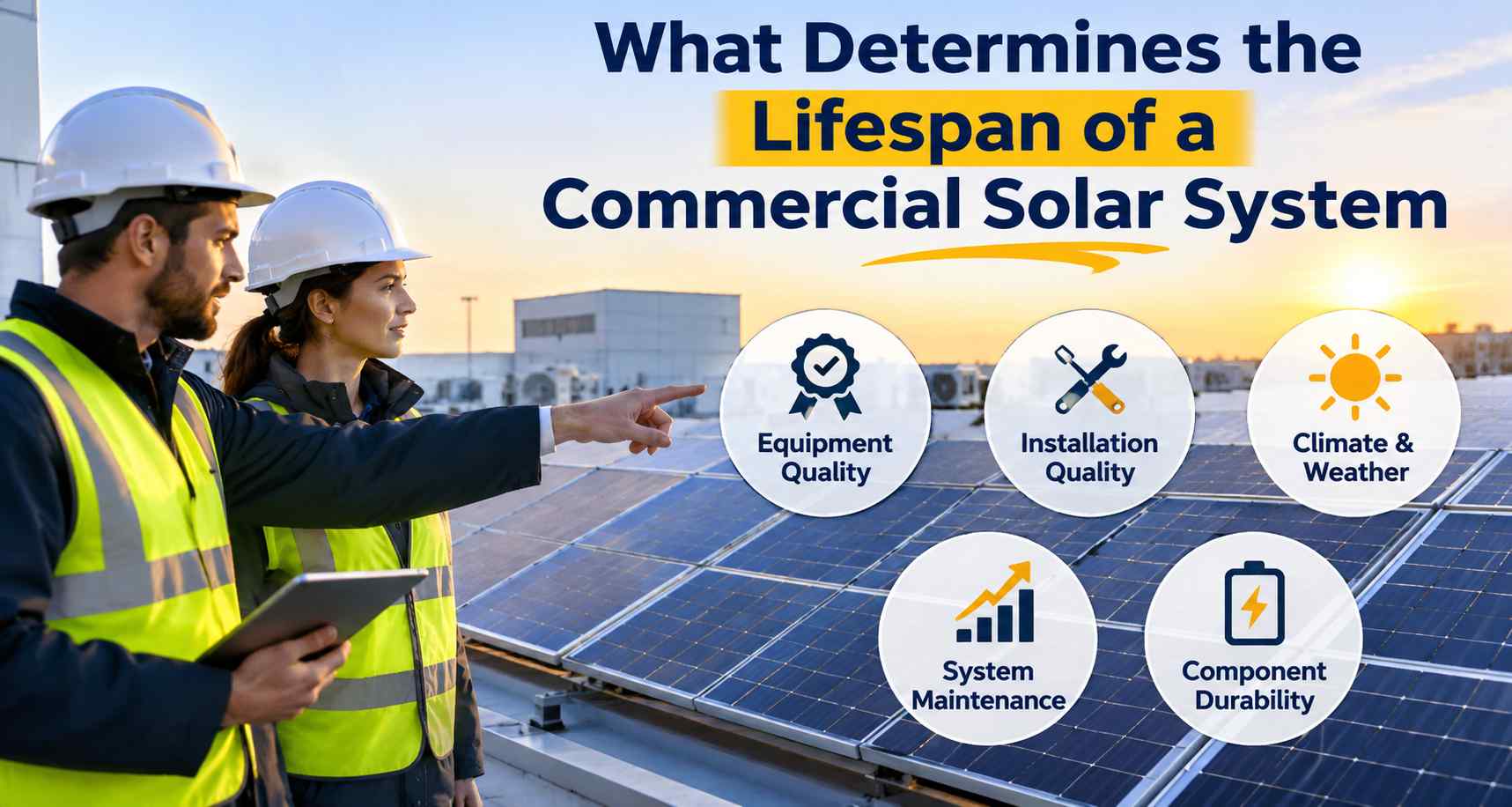
A commercial solar system is a long-term investment that produces electricity for 25–30 years or longer. Commercial solar system lifespan depends on equipment quality, installation, weather, regular care, and daily use.
Without proper care, dust, dirt, worn parts, damaged wires, and electrical faults affect system performance. However, good-quality solar panels, expert installation, regular checks, and timely repairs support long-term use.
Solar panels generally last longer than inverters and other electrical parts. Therefore, businesses must look at the life of every part before planning a solar project. Good planning and regular care help businesses get steady power from their solar systems for years.
What Is the Lifespan of a Commercial Solar System?
The lifespan of a commercial solar system is how long its panels, inverters, wires, mounting frames, and other parts continue to work well.
Commercial solar panels usually last 25–30 years or longer. However, every part has a different working life. The full system’s life depends on the quality of its parts, the way installers set it up, local weather, and regular care.
How Does a Commercial Solar System Age?
Solar panels slowly lose some of their power output as they get older. Their rate of power loss depends on panel quality, design, and weather.
Inverters may need repairs or replacement before the panels reach the end of their working life. In the same way, wires, frames, and electrical joints wear down due to heat, rain, and strong winds.
Dust and dirt block sunlight and lower power output. Regular checks help find small problems before they affect the full system.
Read More :- Why Warehouses Should Install Solar Before the 2027 Deadline
Which Businesses Benefit From Long-Lasting Commercial Solar Systems?
- Warehouses and delivery centers
- Manufacturing units and factories
- Office buildings
- Retail stores and shopping centers
- Hospitals and healthcare centers
- Schools and colleges
- Farms and commercial properties
How Does a Commercial Solar System Maintain Performance Over Time?
Solar equipment needs proper care as it gets older. Businesses should track power output, check equipment, and plan repairs to keep their systems in good shape.
Commercial Solar System Lifespan Timeline
| Stage | What Happens |
| Equipment Selection | Businesses select solar panels, inverters, and other parts based on their energy needs. |
| Professional Installation | Experts install the panels, wires, and frames with proper care. |
| First Performance Check | Installers record the system’s starting power output. |
| Daily Operation | Solar panels produce electricity while facing normal weather conditions. |
| Performance Checks | Businesses track power output and review system alerts. |
| Regular Care | Experts check the panels, wires, frames, and other parts. |
| Part Repair or Replacement | Worn inverters, wires, and other parts receive repairs or replacement. |
| Long-Term Review | Businesses check power output, repair costs, warranties, and equipment condition. |
What Causes Commercial Solar Panels to Lose Power Over Time?
Solar panels use small units called photovoltaic cells to turn sunlight into electricity. As these cells age, their power output slowly drops. Experts call this process solar panel degradation.
Several factors affect the lifespan of commercial solar panels:
- High temperatures: Long periods of heat affect panel materials and power output.
- Sunlight exposure: Years of sunlight slowly affect the materials inside solar panels.
- Moisture: Water exposure affects wires, joints, and protective parts.
- Strong winds and storms: Flying objects and strong winds damage panels and mounting frames.
- Dust and dirt: Dust blocks sunlight and lowers electricity production until workers clean the panels.
- Electrical wear: Inverters and electrical parts face regular stress while the system produces power.
Panel design and build quality also affect commercial solar panel durability. Inverters convert electricity from solar panels into power the business can use.
Businesses should track their electricity production and compare it with expected results. Regular checks help find sudden drops in power output and point to parts that need repair.
Benefits and Limitations of a Long-Lasting Commercial Solar System
Benefits of a Long-Lasting Commercial Solar System
- Clean electricity: Solar panels produce renewable power for many years.
- Lower power bills: On-site solar power reduces the amount of electricity a business buys from the grid.
- Better budget planning: Businesses get a clearer view of their long-term energy costs.
- Long-term investment value: Solar systems spread the value of the first investment over many years.
- Green business goals: Solar power supports business plans to use clean energy.
- Power tracking: Regular checks help businesses find problems and plan repairs.
Limitations of Commercial Solar System Lifespan
- Solar panels slowly lose some power output as they age.
- Inverters and other electrical parts may need replacement before the panels.
- Strong winds, storms, and physical damage affect equipment life.
- Repairs, inspections, and new parts add to running costs.
- Warranty terms and coverage vary by brand and product.
What Should California Businesses Do to Extend Commercial Solar System Lifespan?
Good planning starts before the first panel goes on the roof. Businesses should check their property, select the right equipment, and plan for long-term care.
What Should Businesses Check Before Solar Installation?
- Choose solar panels and parts from trusted brands.
- Read product and power output warranty terms.
- Hire skilled installers who follow safety and building rules.
- Check the roof, drainage, and building strength.
- Review local heat, rain, wind, and storm risks.
- Check the quality of mounting frames, wires, and weather protection.
Commercial Solar System Maintenance Tips
- Track power output and check for any sudden drop.
- Arrange regular checks of panels, wires, and mounting frames.
- Clean panels when dust and dirt affect power output.
- Check inverter alerts and system reports.
- Have trained experts repair damaged panels and loose wires.
- Keep copies of warranties, repair reports, and service records.
These steps form the base of good commercial solar system maintenance. They help businesses keep their equipment in good shape and support steady power production.
How Long Does a Commercial Solar System Last?
A commercial solar system usually works for 25–30 years or longer. Its actual life depends on equipment quality, installation, weather, and care. Solar panels generally last longer than some other parts, such as inverters.
How Does the Lifespan of Solar Panels Compare With Other Commercial Solar Parts?
A commercial solar system has several parts, and each has a different working life. Solar panels may produce electricity for decades. However, inverters and other electrical parts may need repairs or replacement sooner.
| Feature | Solar Panels | Inverters and Other Parts |
| Main Job | Turn sunlight into electricity | Convert, control, and send electricity |
| Working Life | Usually 25–30 years or longer | Depends on the type of part |
| Power Changes | Output slowly drops with age | Wear from heat and electrical stress |
| Care Needs | Checks and cleaning | Checks, repairs, and servicing |
| Replacement | Based on power output and damage | Some parts need early replacement |
| Warranty | Product and power output coverage | Depends on the brand and part |
Businesses should check each part’s details and warranty. Not every part of a solar system lasts as long as the panels.
Is a Long-Term Commercial Solar Investment Right for Your California Business?
Commercial solar is worth looking into when a business has enough space, steady power needs, and plans to use the same property for years.
Your Business May Benefit From Commercial Solar If:
- Your facility uses a lot of electricity during the day.
- Your roof or land has enough space for solar panels.
- You plan to stay at the same location for years.
- You want to lower the amount of grid power you buy.
- You want to use clean energy in your business.
When Should You Get a Professional Solar System Check?
- You plan to install a new commercial solar system.
- Your current system produces less power than expected.
- Your panels, inverter, or mounting frames show damage.
- You need to compare repair and replacement costs.
- You want to check your warranty and future repair needs.
Businesses in Los Angeles, Orange County, Riverside, San Bernardino, San Diego, Santa Barbara, Ventura, and Imperial County should review their property and power needs before choosing a solar system.
Common Commercial Solar System Lifespan Myths and Facts
| Myth | Fact |
| Solar panels stop working after 25 years. | Panels may keep producing electricity beyond 25 years, but their output slowly drops. |
| Every solar part lasts 30 years. | Inverters and other parts have different working lives. |
| Solar panels need no care. | Regular checks, cleaning, and repairs support good performance. |
| Power loss means the system has failed. | A slow drop in power output is a normal part of panel aging. |
| Every solar warranty offers the same cover. | Warranty length and terms differ by brand. |
| A new inverter means new solar panels. | Experts can replace an inverter on its own if it suits the existing system. |
Ready to Plan a Long-Lasting Commercial Solar System for Your California Business?
Plan your commercial solar project with expert support from California Solar. Our team helps businesses review energy needs, select equipment, check roof conditions, and plan installation. We also discuss warranties, maintenance, financing, and available incentives. Contact California Solar to explore a solar system suited to your property, power use, and long-term business goals.
Frequently Asked Questions
Q1: What Is the Average Lifespan of a Commercial Solar System?
A commercial solar system usually works for 25–30 years or longer. Solar panels tend to last longer than inverters and some electrical parts. Equipment quality, installation, local weather, and regular care affect its working life.
Q2: What Factors Determine the Lifespan of Commercial Solar Panels?
Panel quality, build standards, installation, heat, rain, wind, and regular care affect panel life. Good mounting, proper weather protection, and regular power checks help panels produce electricity for many years.
Q3: How Long Do Commercial Solar Panels Last in California?
Commercial solar panels in California usually last 25–30 years or longer. Their working life depends on panel quality, local heat, installation, weather, and care. Actual results differ by product and site conditions.
Q4: How Much Do Commercial Solar Panels Degrade Each Year?
Commercial solar panels usually lose around 0.3%–0.8% of their power output each year. The exact rate depends on panel quality and design. Manufacturers list expected power output levels in their performance warranties.
Q5: How Does Weather Affect Commercial Solar System Lifespan?
Heat, rain, strong winds, storms, and flying debris affect solar equipment. High temperatures affect panel output, while water and physical damage affect wires and mounting frames. Good equipment and regular checks support long-term use.
Q6: How Often Should a Commercial Solar System Be Inspected?
Inspection needs depend on the equipment, site conditions, and manufacturer advice. Businesses should track power output and arrange regular expert checks to find damaged panels, loose wires, electrical faults, and other problems.
Q7: Do Commercial Solar Inverters Need to Be Replaced?
Yes. Inverters have a different working life from solar panels and may need replacement sooner. Expert checks help find inverter faults, review repair costs, and confirm whether a new inverter suits the existing system.
Q8: Can Maintenance Extend the Lifespan of a Commercial Solar System?
Regular care helps keep solar equipment in good shape. Panel checks, suitable cleaning, wire inspections, and timely repairs help prevent small issues from growing and support steady power production over the system’s working life.
Q9: How Do Solar Panel Warranties Affect Long-Term System Ownership?
Solar warranties explain the manufacturer’s cover for product faults and power output. Businesses should check warranty length, limits, and claim rules before installation. These details help them plan future repair costs and equipment needs.
Q10: When Should a Business Repair, Upgrade, or Replace Its Commercial Solar System?
Businesses should review system age, power output, equipment condition, repair costs, and warranty coverage. An expert check helps decide whether repairs, a new inverter, or a full system replacement offers better long-term value.