Every business needs a steady supply of electricity to keep its daily work moving. Offices need power for lights and computers, while factories run machines and warehouses use large cooling systems. Solar energy lets businesses generate their own electricity from sunlight. By understanding commercial solar energy production, business owners gain a clearer view of expected power output, energy costs, and project value.
At California Solar, we help businesses explore solar power based on their buildings, energy use, and long-term plans. A good solar project starts with clear facts about sunlight, panel output, roof space, and power needs. These details help businesses choose a system that fits their goals.
What Does Solar Energy Production Mean for Commercial Properties?
Solar energy production is the amount of electricity a solar system makes over a set period. The system uses solar panels to collect sunlight and turn it into electricity for the building.
The amount of power a commercial property receives depends on its system size, sunlight hours, panel layout, and equipment. For example, a large factory with a wide roof may have room for a large solar array. A smaller office needs a plan based on its roof space and power use.
Solar production is measured in kilowatts (kW) and kilowatt-hours (kWh). These terms have different meanings:
- Kilowatts (kW): This shows the system’s power capacity at a given point.
- Kilowatt-hours (kWh): This measures the amount of electricity the system produces over time.
For example, a 100 kW solar system that runs at full rated output for one hour produces 100 kWh of electricity. In real conditions, output changes with sunlight, heat, shade, and other site factors.
What Factors Affect Solar Production at a Commercial Site?
Every commercial property has its own needs and site conditions. A solar design team studies the main factors affecting solar production before setting the size and layout of the system.
1. Sunlight Hours
Sunlight plays a key role in solar output. Sites with strong sunlight during the day tend to produce more electricity than sites with long periods of shade or cloud cover.
Southern California offers strong solar resources, which makes it a good region for commercial solar projects. Still, the exact output depends on the property’s location and local weather.
2. Panel Size and System Capacity
The number of panels and their rated power shape the system’s total capacity. A larger array produces more electricity when other conditions stay similar.
However, panel count alone does not tell the full story. The design team must also check the roof layout, panel spacing, shade, and equipment ratings.
3. Panel Efficiency
Commercial solar panel efficiency refers to how well a panel turns sunlight into electricity. Higher-efficiency panels produce more power from the same amount of roof space.
This feature matters for buildings with limited roof area. A good panel choice helps the project team make strong use of the available space while meeting the site’s energy goals.
4. Shade and Panel Direction
Trees, nearby buildings, vents, and rooftop equipment cast shadows across solar panels. Even partial shade affects output, depending on the system design and equipment.
Panel direction and tilt also affect how much sunlight the array receives. Engineers study the roof’s angle and direction to set a layout that suits local sun patterns.
5. Inverters and Other Equipment
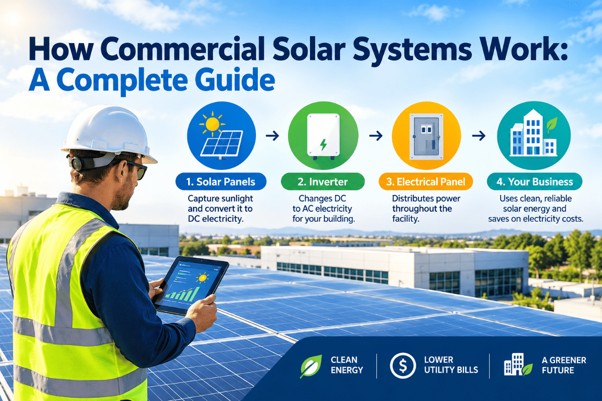
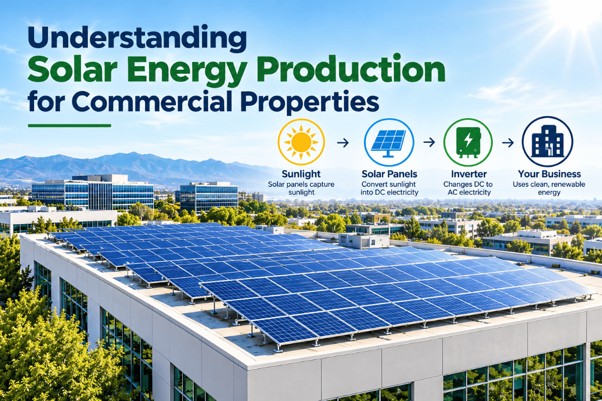
Solar panels produce direct current (DC) electricity. Inverters change it into alternating current (AC) power for the building. Inverter size, system design, and electrical losses all affect the amount of usable power the system supplies.
A well-planned system accounts for these factors when estimating yearly production.
Read More :- Why Warehouses Should Install Solar Before the 2027 Deadline
How Do Roof Size and Direction Affect Solar Output?
Roof space shapes how many panels a commercial property supports. A wide, open roof gives the design team more room to place panels. However, the full roof area does not always suit solar use. Skylights, vents, walkways, and other equipment take up space.
Roof direction also matters. In Southern California, south-facing panels tend to receive strong sunlight across the day. East-facing panels produce more power in the morning, while west-facing panels tend to produce more in the afternoon.
The best layout depends on when the business uses electricity. A company with heavy afternoon power use may value strong afternoon output. A site with steady daytime demand needs a design that matches its full workday.
A commercial rooftop solar installation starts with a review of roof space, structure, shade, and energy use. This review helps the design team estimate panel capacity and set a layout that makes good use of the site.
Solar for Different Types of Commercial Buildings
Different buildings need different solar plans.
- Retail stores: A suitable commercial rooftop solar for retail stores project matches panel output with daytime lighting, cooling, and other power needs.
- Factories: A factory solar panel installation needs a close review of machine loads, work hours, roof space, and electrical demand.
- Warehouses: Large roof areas offer space for solar panels, while cooling systems and lighting shape the site’s power needs.
- Office buildings: Office hours and daytime equipment use help the team plan a system around daily electricity demand.
How Do Businesses Estimate Commercial Solar Energy Production?
A solar production estimate gives business owners an idea of how much electricity a planned system produces over a month or year. The team starts with the system’s rated capacity and then studies local sunlight, panel direction, shade, and equipment.
For a simple example, consider a 100 kW solar system that produces an average of five equivalent full-power sunlight hours per day.
The basic estimate is:
100 kW × 5 hours = 500 kWh per day
Over 30 days, this equals 15,000 kWh before allowing for system losses or changes in sunlight. Actual output depends on site conditions and system design.
A commercial solar kWh production estimate gives a useful starting point for project planning. A detailed estimate also accounts for inverter losses, panel temperature, shade, weather, and other site details.
Business owners should compare estimated solar output with their electricity bills. This helps them understand how much of their power use the system is set to cover.
How Does Weather Affect Solar Production in Southern California?
Southern California has strong sunlight for much of the year. Still, daily and seasonal weather changes affect solar output.
Clear skies give panels direct sunlight, while clouds reduce the light that reaches them. Rainy days tend to bring lower output, though panels still produce electricity when daylight reaches them.
Heat also affects panel performance. Solar panels need sunlight to produce power, but high temperatures reduce output compared with cooler conditions under the same sunlight.
Dust, coastal haze, and nearby shade also affect the amount of sunlight that reaches the panels. A sound design uses local weather data and site details to build a realistic production estimate.
Seasonal changes matter, too. Longer summer days offer more hours of sunlight, while shorter winter days reduce the daily production window. A yearly estimate accounts for these changes instead of treating every month as the same.
How Do Solar Tax Credits Affect Commercial Project Planning?
Federal solar tax rules play a key role in project costs. Businesses planning a project near the end of 2027 should check current law and speak with a tax expert before setting a project schedule.
Under applicable federal rules, some eligible commercial projects qualify for a 30% investment tax credit. Certain projects also qualify for extra credits based on their location, equipment, or other requirements.
- Energy community bonus: Certain projects in approved areas qualify for an extra credit.
- Domestic content bonus: Projects that meet U.S.-made materials and equipment requirements qualify for an extra credit.
- Low-income bonus: Certain eligible projects qualify for extra credits through an approval process.
Each bonus has its own rules. Businesses must check the project’s start date, construction progress, service date, and other eligibility conditions. Some public bodies and tax-exempt groups also qualify for direct pay under federal rules.
The available credit depends on the law that applies to the project. California Solar encourages businesses to confirm tax details with a qualified adviser before making financial plans.
Plan Your Commercial Solar Project With California Solar
A good solar project starts with a clear view of your building’s power needs and expected energy output. California Solar helps businesses review site conditions, compare system options, and plan for solar production. Contact our team to discuss your property and build a solar plan around your business goals.
Frequently Asked Questions
Q1: How much electricity can a commercial solar system produce?
Output depends on system size, sunlight, panel direction, shade, and equipment. A 100 kW system with five equivalent full-power sunlight hours produces about 500 kWh per day before system losses and weather changes.
Q2: What factors affect solar energy production for commercial properties?
Key factors include sunlight hours, panel capacity, panel efficiency, roof direction, shade, temperature, and inverter performance. Local weather and the building’s layout also shape output, so each project needs its own production estimate.
Q3: How do roof size and orientation impact commercial solar output?
A larger roof with open space supports more panels. Roof direction and tilt affect how much sunlight panels receive throughout the day. Engineers review shade, roof features, and power needs to plan a useful layout.
Q4: How is commercial solar energy production measured?
Solar capacity is measured in kilowatts (kW), while energy production is measured in kilowatt-hours (kWh). Monitoring tools record output over time, helping businesses compare actual production with project estimates and daily power use.
Q5: How does weather affect solar energy production in Southern California?
Clear skies support strong output, while clouds and haze reduce sunlight reaching the panels. High heat also lowers panel efficiency. Longer summer days support higher daily production, while shorter winter days reduce the hours available for generation.