
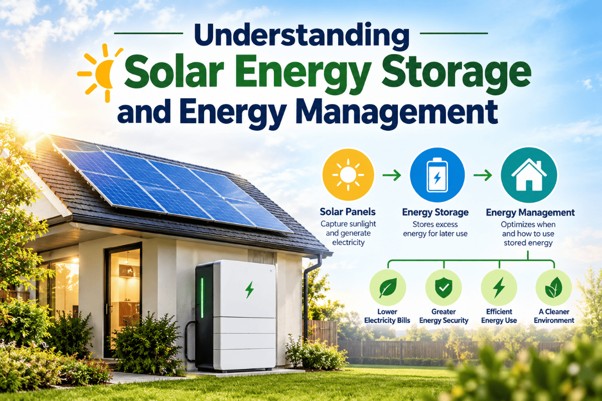
Understanding Solar Energy Storage and Energy Management

Sunshine pays the bills at noon. But what pays them at 6 p.m., when the sun drops and the lights stay on? Smart businesses solve this puzzle with solar energy storage. A battery holds extra power from the day and hands it back when rates climb. California Solar helps companies across the state build this kind of setup.

Our team designs systems to cut costs, keep the lights on, and put clean power to work around the clock. Read on to see how storage and energy management team up inside your building.

How Does a Battery Hold Sunshine for Later?

Your panels make power all day long. The building uses some of it right away. The extra flows into a battery. Later, when the sun sets, or rates jump, the battery sends that power back to your lights, machines, and cooling units. Think of it as a piggy bank for sunshine. You save coins today and spend them tomorrow.

The Simple Flow in Three Steps

  1. Panels collect sunlight and turn it into power. Your team uses this power first, so the grid bill stays low.
  2. Extra power moves into the battery. The battery fills up while the sun shines, so every bit of sunshine gets put to use.
  3. The system releases stored power at the right time. Evening hours and high-rate hours run on your own clean energy.

A commercial battery energy storage system works like a big, smart power bank for your building. It links to your panels and your utility meter. Software tells it when to charge and when to give power back. California Solar sizes each unit to match your load, so your site gets the right mix of backup and savings.

Top Benefits of Storage for Your Business

Storage pays you back in four clear ways. Each one boosts your budget and your workday.

  • Lower demand charges: Utilities bill you for your highest burst of power use. A battery covers those spikes, so your peak number drops and your bill follows.
  • Backup power: When the grid pauses, the battery keeps key tools running. Your team stays on task, and your customers stay happy.
  • Time-of-use savings: California rates climb in the late afternoon and evening. Stored power covers those hours, so you buy less from the grid when prices peak.
  • Clean energy goals: Each stored kilowatt-hour replaces grid power. Your company moves closer to its green targets, and your brand shines brighter.

Factories love steady power. Machines run best on smooth, reliable flow. Commercial solar systems for manufacturing facilities pair panels with batteries to feed heavy equipment, ovens, and cooling lines through every shift. California Solar designs each build around your production schedule, so your line keeps its rhythm.

What Does an Energy Management System Do?

Think of an energy management system as the brain of your site. It reads data, makes choices, and acts in seconds. Commercial energy management systems track how much power each part of your building uses. They monitor rates, weather, and battery levels simultaneously.

Smart Jobs Your System Handles

  • Live tracking: Screens show your power use minute by minute. You spot patterns fast and act on them.
  • Smart charging: The system fills the battery when solar output peaks or rates drop. It sends power out when prices climb.
  • Load shifting: Software starts big machines when power costs less. Your work gets done, and your bill shrinks.
  • Clear reports: Easy dashboards show savings, usage, and carbon cuts. Your finance team and your green team both get the numbers they love.

Together, storage and smart controls turn a solar array into a money-saving engine. The battery holds power. The software spends it with care. Your business wins on both ends.

Built for the Golden State

California brings plenty of sunshine, bold clean energy goals, and rate plans that reward smart timing. Storage links all three. Panels harvest the sun, batteries save it, and smart software decides when to use it.

California Solar knows local rates and local rules, so our designs fit your site like a glove. Each project starts with a close look at your bills and your load. Next, our team maps out a clear plan, and your savings start to take shape.

Why Should You Move on the 30% Tax Credit Now?

The federal solar Investment Tax Credit gives your business a golden reason to act. The clock runs to December 31, 2027. Companies that finish construction and place a system in service before that date still earn the full 30% rate. To qualify, your project must meet the placement or Commence Construction rules and follow FEOC requirements.

Credit Details at a Glance

Full 30% rate

Projects that meet prevailing wage and apprenticeship rules earn the 30% increased rate in place of the 6% base rate. This step lifts your savings fast.

Direct pay

Qualified entities receive a 30% direct payment when they meet the wage and apprenticeship rules. This list covers tax-exempt groups, state governments and their political subdivisions, the Tennessee Valley Authority, Indian tribal governments, Alaska Native Corporations, and rural electric cooperatives.

Bonus adders

Three extra credits add up to 10% each when projects meet the listed rules. They are Energy Community, Low-income, and Domestic Content.

Rules shape each project, so a tax advisor should confirm your fit. Meanwhile, California Solar works as your industrial solar installation company, lining up design, permits, and timing so your project crosses the finish line before the deadline.

Let’s Teach Your Building to Save the Sun

Your roof already catches the sun. Now it is time to teach your building to save it. Contact California Solar today and book a storage and savings review. Share your power bills, and our team maps out battery size, savings, and tax credit timing in one clear plan. The sun keeps shining, and the 2027 clock keeps ticking. Reach out now and turn every golden hour into profit.

Frequently Asked Questions

Q1: How does solar energy storage work for commercial buildings?

Panels make power during the day, and your building uses it first. Extra energy flows into batteries. When the sun sets, or rates climb, the system sends stored power to your equipment, lights, and cooling, which trims the bill.

Q2: What is an energy management system for commercial solar?

An energy management system is the smart software brain of your site. It tracks power use, solar output, and utility rates in real time, then decides when to charge batteries, release power, or shift heavy loads.

Q3: How can battery storage reduce peak demand charges?

Utilities bill commercial customers by their highest burst of power use. A battery releases stored energy during those short spikes, so the grid supplies less. Your peak number drops, and your monthly demand charge drops with it.

Q4: How long can a commercial solar battery power a building during an outage?

Backup time depends on battery size and the loads you choose to power. A well-sized system keeps critical equipment running for several hours, and larger setups extend that window to a full day or longer.

Q5: What size battery storage does a commercial solar system need?

Size depends on your peak demand, everyday energy use, and backup goals. California Solar studies your utility bills and load data, then matches battery capacity to your needs so every kilowatt-hour earns its keep.
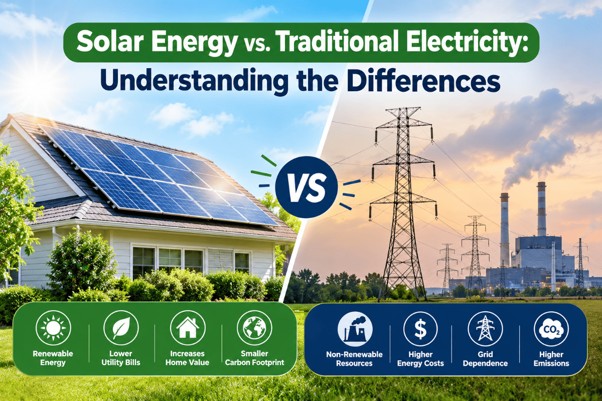
Solar Energy vs. Traditional Electricity: Understanding the Differences

Flip a switch, and the lights glow. Behind the switch, two power sources are in a race for your business. A close look at solar energy vs. traditional electricity shows how each one makes power, sets prices, and shapes your future. This guide walks you through the facts in plain words. Read on, and you will spot the smart pick for your building.

How Does Each Power Source Make Electricity?

Power starts in two different places. Let’s break down each path, step by step.

Solar Electricity Generation

Solar panels catch sunlight and turn it into power. Tiny cells inside each panel soak up the light and push electrons into motion. The motion creates direct current, and an inverter converts it into the alternating current your building uses. Sunshine arrives free of charge, so your fuel bill drops to zero. Every bright day adds to your own solar electricity generation, right on your roof or land.

Traditional Power Generation

Traditional power generation relies on big plants. Coal, natural gas, and oil heat water into steam. The steam spins a turbine, and the turbine runs a generator. Wires then carry the electricity across towns and states to your meter. This setup has powered homes and factories for over a century. It works well, yet it depends on non-renewable energy sources, so each plant needs a steady stream of new fuel.

Is Solar Cheaper Than the Grid?

Money talks, so let’s compare the two side by side. The table below gives you a quick snapshot.

Feature Solar Energy Traditional Electricity
Fuel source Sunlight Coal, gas, and oil
Fuel price Free Set by the market
Monthly energy costs Steady and predictable Shift with utility rates
Power location Right at your site Far-off plants
Emissions Zero while running Released when fuel burns
Tax benefits 30% federal credit through 2027 Standard utility pricing

What the Numbers Mean

  • Free fuel: Sunlight arrives at no charge, so your energy costs hold steady for decades.
  • Local power: Panels work right at your site, so electricity travels a short path.
  • Long life: Quality panels deliver power for 25 years or more.

Here is the big picture. Solar power vs. grid electricity comes down to control. With solar, you own the source and plan your budget with confidence. With the grid, utility companies set the price, and your bill follows the market. Smart owners like to hold the steering wheel themselves.

Read More :- Commercial Battery Storage and Solar: Maximize Your Tax Benefits Before 2027

Federal Tax Credit: A Window Worth Using

The solar energy vs. traditional electricity debate gets sweeter once tax savings join the party. The federal Investment Tax Credit (ITC) hands businesses a big boost. The solar ITC expires on December 31, 2027, so the clock is ticking. Finish construction and place your system in service before the deadline, and you lock in the full 30% credit.

Here is how to qualify:

  • Placement or Commence Construction rules: Meet the placement requirements or start construction on time.
  • FEOC requirements: Follow the Foreign Entity of Concern rules for equipment and supply sources.
  • Wage and apprenticeship standards: Meet the prevailing wage and apprenticeship rules to earn the 30% increased rate instead of the 6% base rate.

Direct pay adds another option. Qualifying entities receive a 30% direct payment, assuming they meet the wage and apprenticeship rules. Direct pay covers these groups:

  • Tax-exempt entities
  • State governments and their political subdivisions
  • The Tennessee Valley Authority
  • Indian tribal governments
  • Alaska Native Corporations
  • Cooperatives that supply electric energy to rural areas

Better yet, three ITC adders offer up to 10% each in extra credit: Energy Community, Low-income, and Domestic Content. California Solar designs commercial solar energy solutions to match each rule, so you claim every dollar you earn.

Does Solar Fit Every Industry?

Yes. Solar adapts to the size and needs of each building. Let’s look at two big winners:

Factories and Warehouses

Factories run heavy machines from sunrise to sunset. Large roofs and open land give them room to spare. Solar power systems for industrial facilities turn the empty space into a power plant. Lower energy bills then free up cash for new equipment, hiring, and growth.

Hospitals and Clinics

Hospitals need steady power around the clock. Solar power systems for healthcare facilities deliver clean energy to run lights, scanners, and cooling. Pair the panels with battery storage, and the building gains extra backup power for life-saving work. Savings then flow back into patient care.

Cleaner Power for a Cleaner Planet

The solar power environmental benefits add up. Solar panels create electricity with zero emissions while they run. Here is what your business gains:

  • Cleaner air: Solar skips the smokestack, so the air around your community stays fresh.
  • Lower carbon footprint: Each kilowatt-hour from the sun replaces one from a fuel-burning plant.
  • Water savings: Panels use little water, while steam plants need plenty for cooling.
  • Brand strength: Customers love companies that go green.

Why Choose California Solar?

California Solar is a trusted California solar company with deep roots in the Golden State. Our team knows the local sunshine, rules, and utilities inside out. We handle design, permits, and installation from start to finish. Your traditional electricity supply stays connected, so the lights stay on during the switch.

Here is what you get:

  • A custom plan sized to your energy use
  • Full guidance on the 30% ITC, adders, and direct pay
  • Battery options for backup power
  • A clear savings forecast before you sign

Ready to Put the Sun on Your Payroll?

Choosing between solar energy and traditional electricity gets easy once you see your own numbers. The 30% federal credit keeps ticking toward December 31, 2027, so the best time to act is now. Grab your free solar assessment from California Solar today, and watch your rooftop become your hardest-working employee. Call us today and let the sunshine do the heavy lifting.

Frequently Asked Questions

Q1: What is the difference between solar energy and traditional electricity?

Solar energy turns sunlight into power right at your site, while traditional electricity comes from large plants burning coal, gas, or oil. Solar gives you a free fuel source and steady pricing, and the grid delivers power through wires.

Q2: Is solar energy cheaper than traditional electricity for businesses?

Yes. Solar locks in a low, steady rate for 25 years or more. Add the 30% federal tax credit before December 31, 2027, and your payback period gets shorter. Businesses then enjoy years of free sunlight powering daily operations.

Q3: How does commercial solar protect businesses from rising utility rates?

Solar makes your own power, so you buy less from the utility. Your solar output stays the same price each year, giving you a steady budget. Battery storage adds an extra shield against rate hikes.

Q4: Can a business still use grid electricity after installing solar panels?

Yes. Commercial solar systems stay linked to the grid. Your panels power the building first, and grid electricity fills the gap at night or during low-light hours, so your operations keep humming along.

Q5: How does solar energy compare to fossil fuel electricity for the environment?

Solar produces clean power with zero emissions while running. Fossil fuel plants release carbon dioxide as they burn fuel. Switching to solar cuts your carbon footprint, supports cleaner air, and helps your business meet its green goals.